Every character in Valmiki's Ramayana
147 people, monkeys, demons, gods and birds from the seven books of the Sanskrit poem, with the weapons, vimanas and creatures around them: who they are, whom they belong to, and where they enter the story.
Open the indexReading with a child? Switch to and every entry becomes a few plain sentences.
The Ramayana is the story of prince Rama of Ayodhya: his exile, the theft of his wife Sita by the demon king Ravana, and the war he fights with an army of monkeys and bears to bring her home. Valmiki's Sanskrit poem, in about 24,000 verses, is the oldest telling we have.
This guide follows Valmiki's text alone. Later versions, Tulsidas's Ramcharitmanas, Kamban's Tamil epic, the Jain and Southeast Asian Ramayanas, add characters and change others. Where a famous detail comes from them rather than from Valmiki, the entry says so.
Every entry can be read two ways. Simple tells the story in a few plain sentences for younger readers. Full gives the long version with chapter references for anyone who wants to go back to the poem.
The last book, the Uttara Kanda, is included because it belongs to the text as it was handed down, with a note that most scholars consider it a later addition.
Seven books
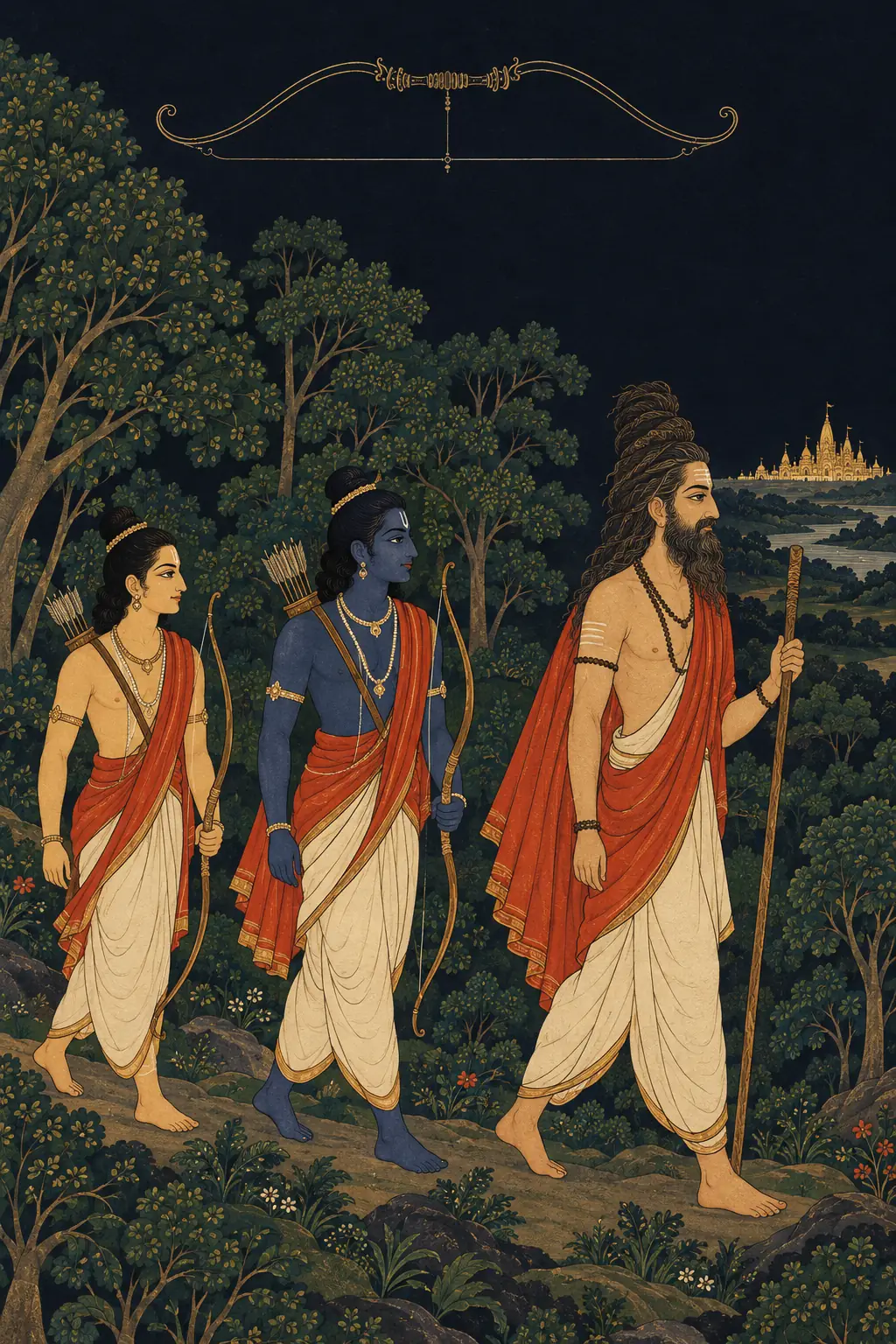
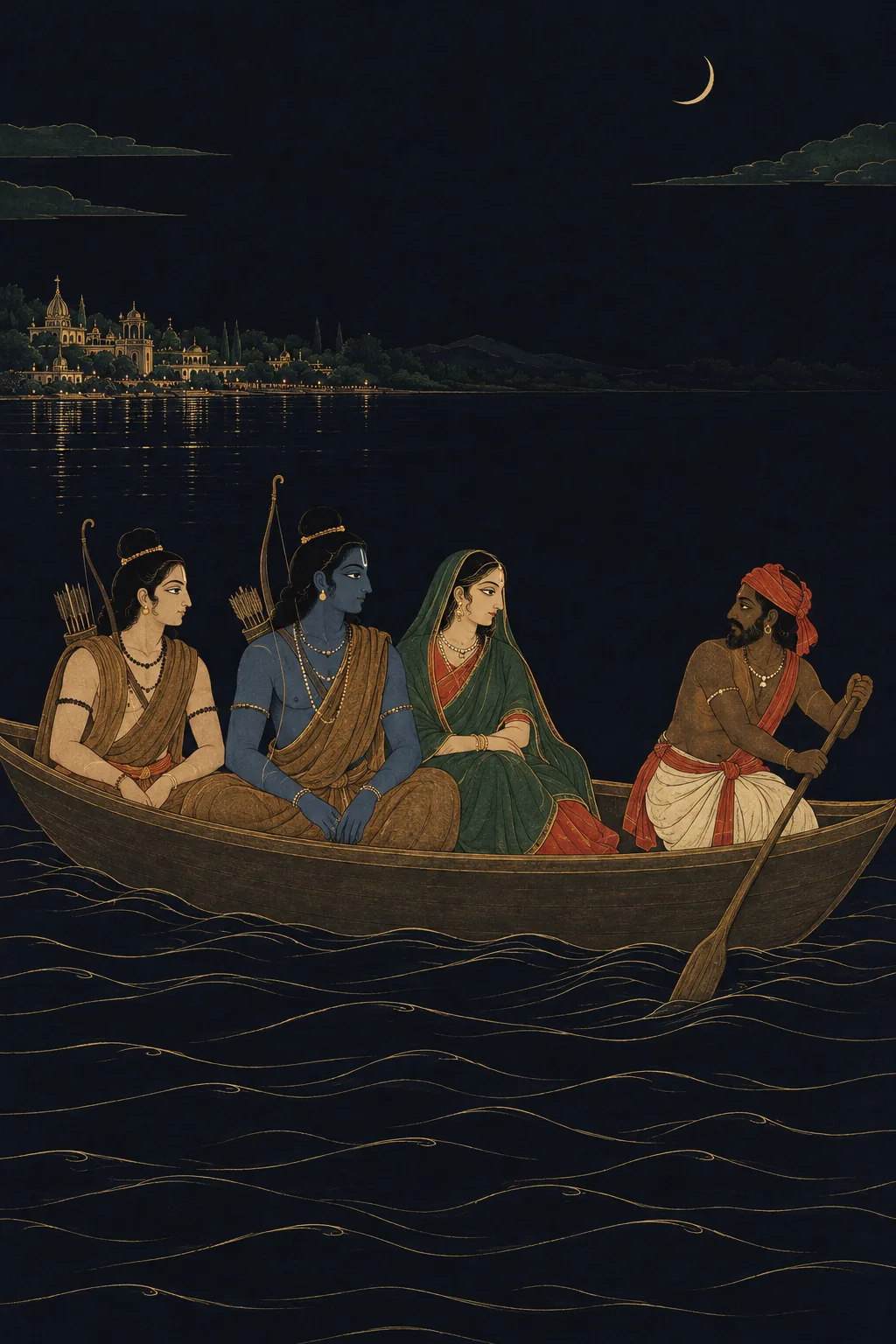
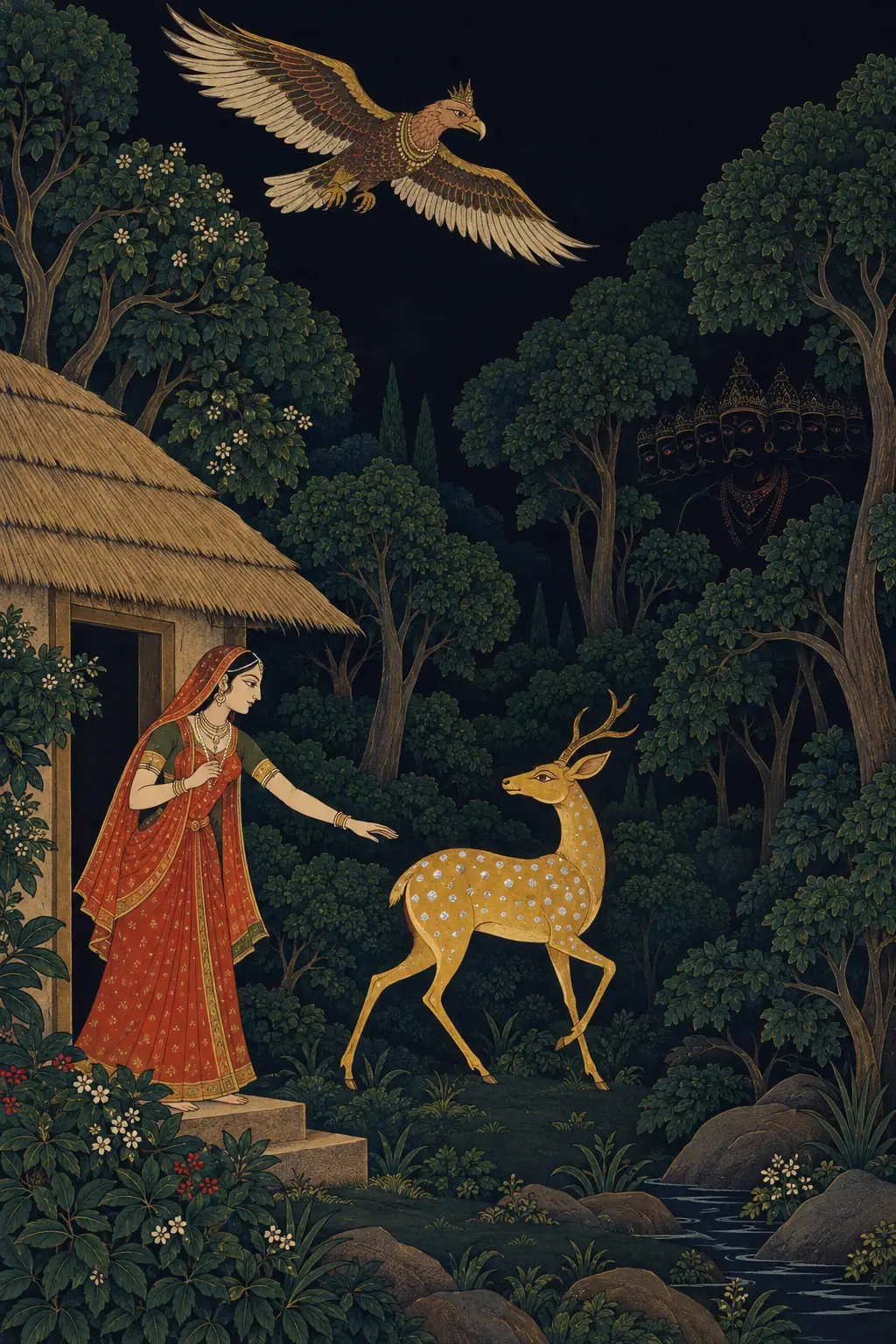
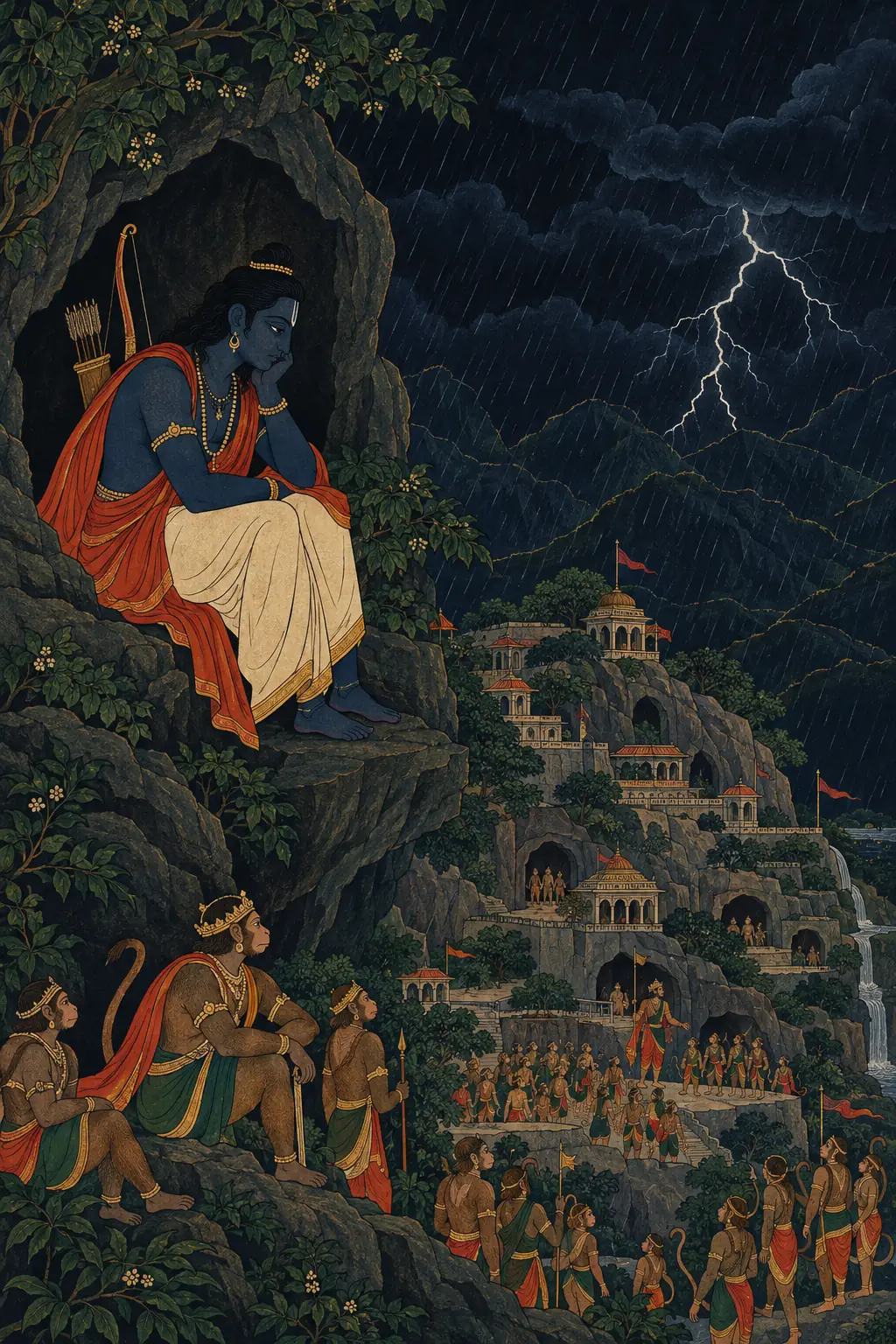
The poem is split into seven books called kandas. Tap a book to see what happens in it and who turns up.
Valmiki's poem is divided into seven kandas and 645 sargas, or chapters. Choose a book to see where it takes place and who enters it.
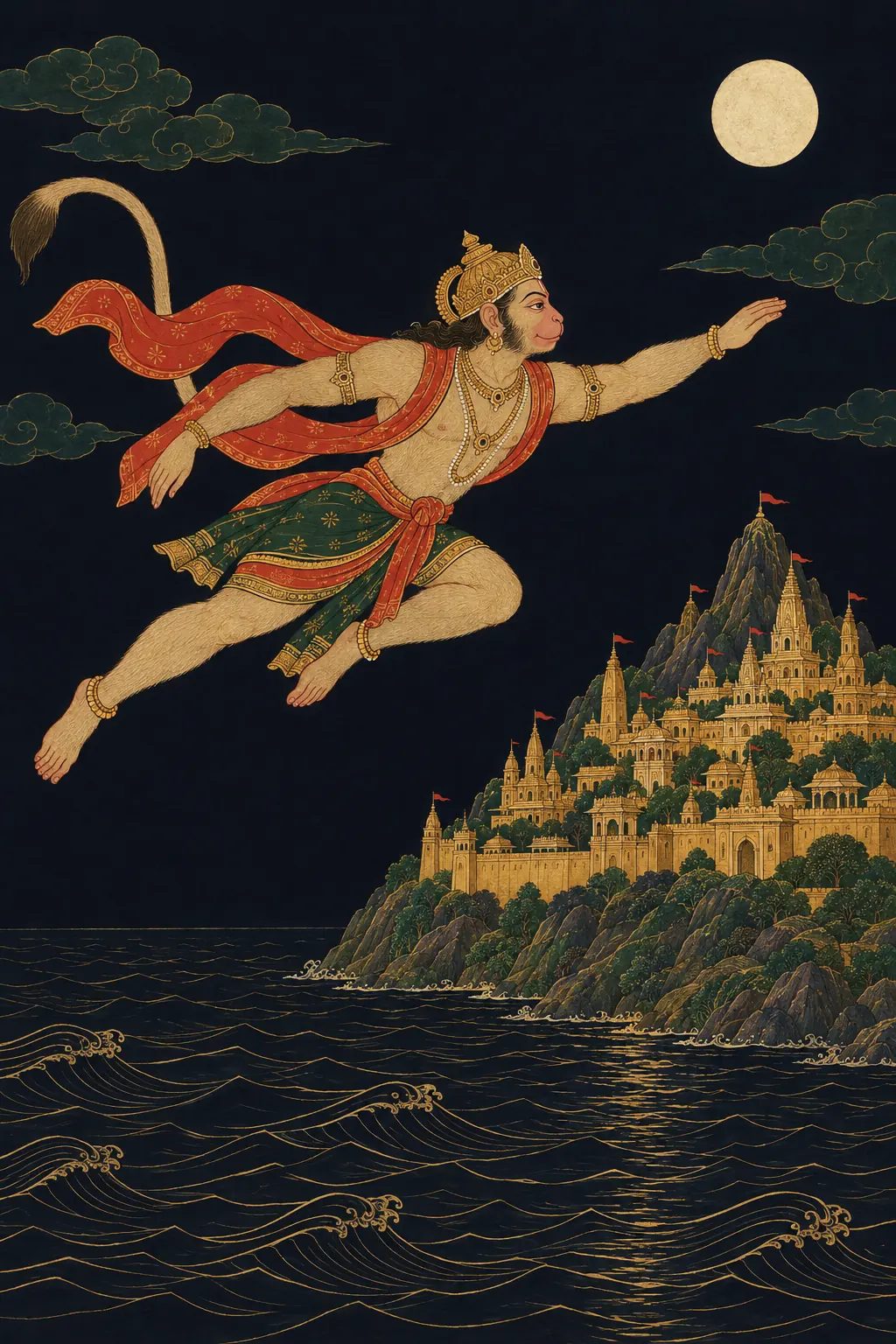
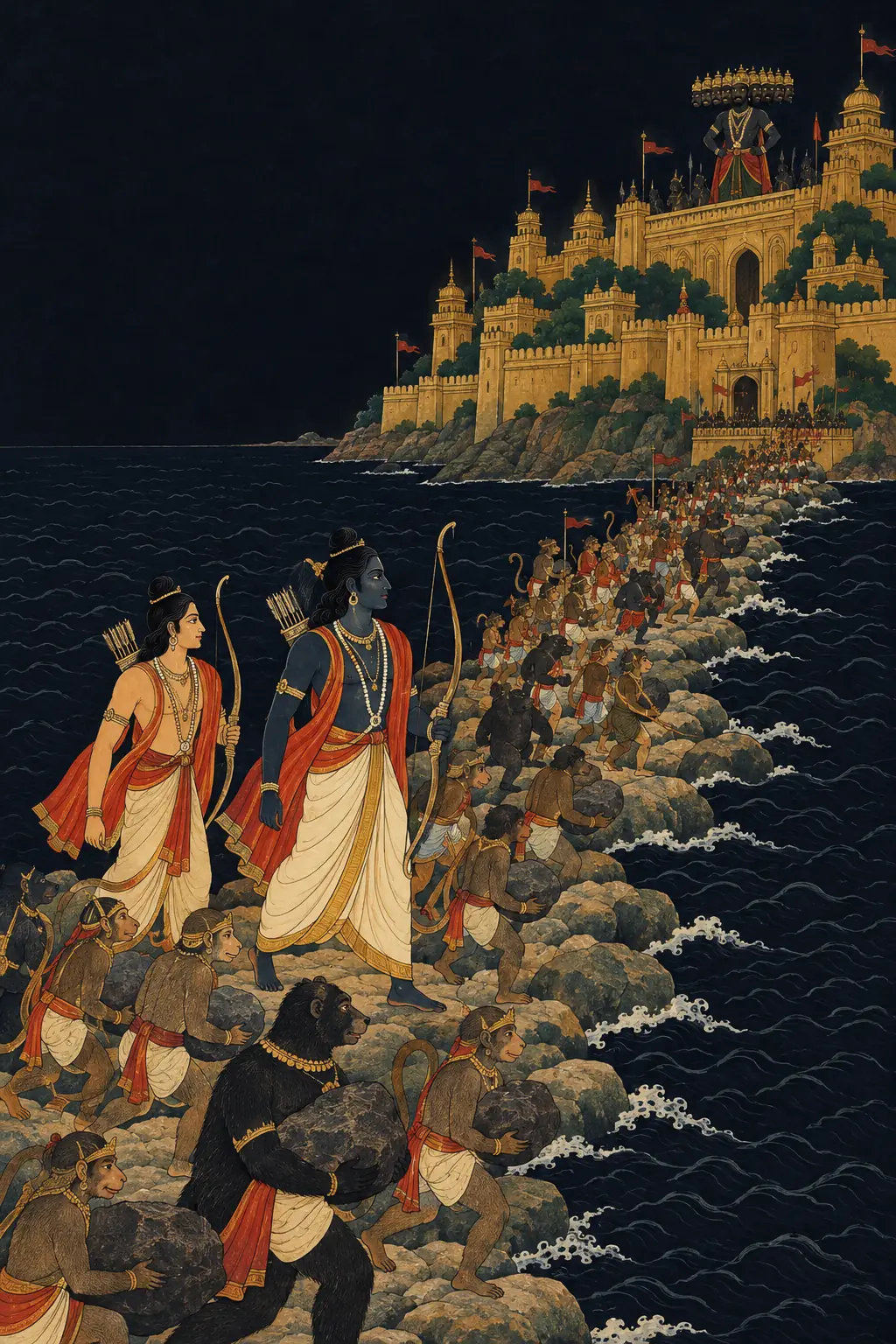
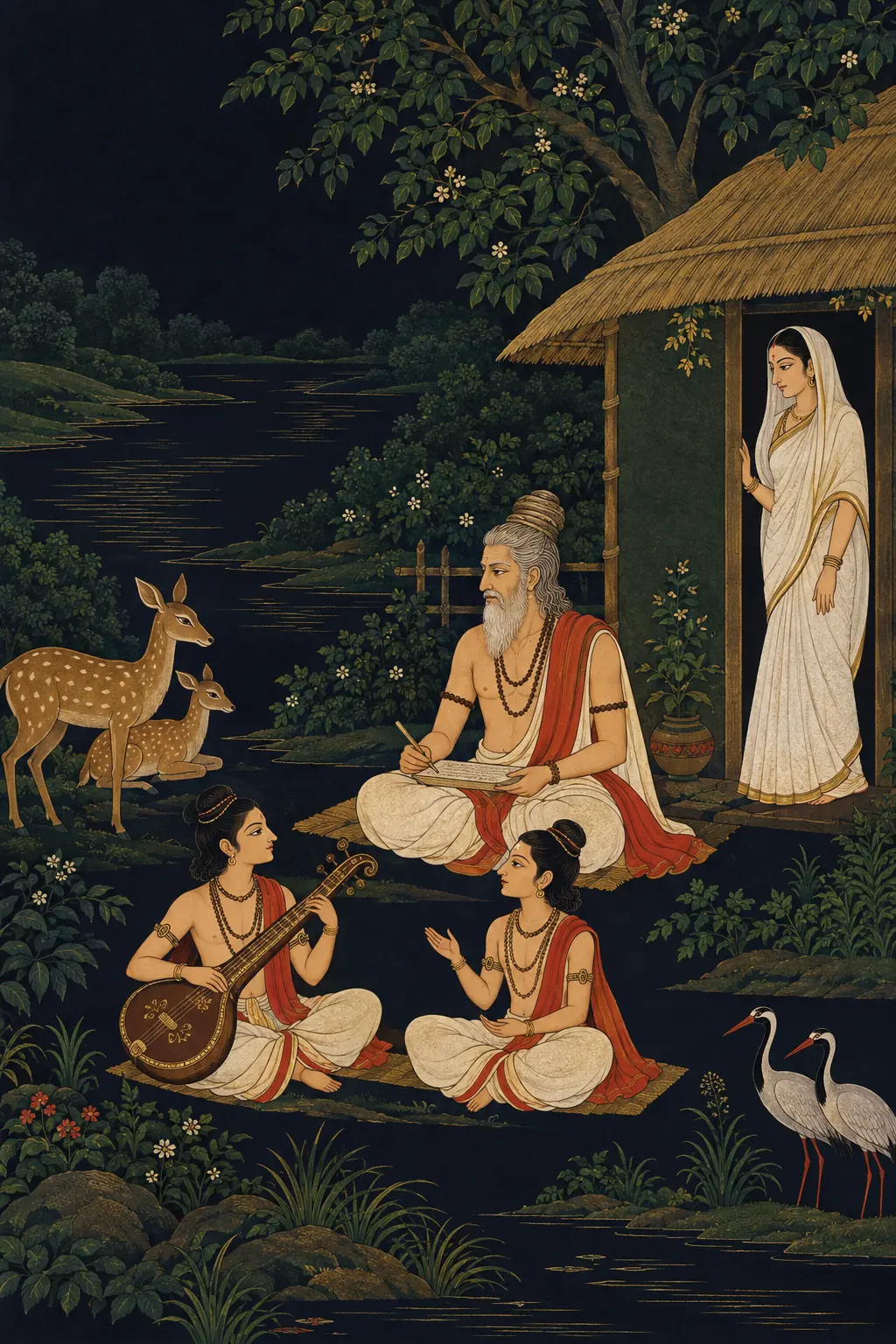
The courts
Everyone in the story belongs somewhere: a palace, a forest, a monkey city or the demon island. Drag sideways and tap a face.
Every character belongs to a court: Ayodhya, Mithila, Kishkindha, Lanka, the hermitages or the heavens. Drag the row sideways; choose a portrait to open its entry.
The index
Three families
Tap any name to jump to that character.
Gold arcs join husband and wife; grey lines run from parent to child. Select any name to open its entry.
The world of the poem
The weapons, flying palaces, magic animals and special things in the story, and who used them.
The astras and weapons, the armour and tokens, the vimanas and chariots, and the mounts and creatures of Valmiki's text, each linked to the people who used it.
Who am I?
Read the clue and guess the character. Stuck? Ask for another clue. Each one is easier than the last.
Three clues per character, from the obscure to the obvious, all taken from Valmiki's text. Fewer clues, more points.
Score 0
On the text
Everything here is drawn from the Valmiki Ramayana as it has come down in the vulgate recension: seven books, 645 chapters, roughly 24,000 verses. Chapter numbers in the entries follow that text; the critical edition prepared at Baroda, which cuts some passages, numbers a few chapters differently.
Where a detail everyone knows is missing from Valmiki, the stone Ahalya, the tasted berries, Urmila's long sleep, Lakshmana's line in the sand, the entry says so rather than quietly including it. Where Valmiki is uncomfortable, Vali shot from hiding, Sita sent away, Shambuka killed, the entry says that too.
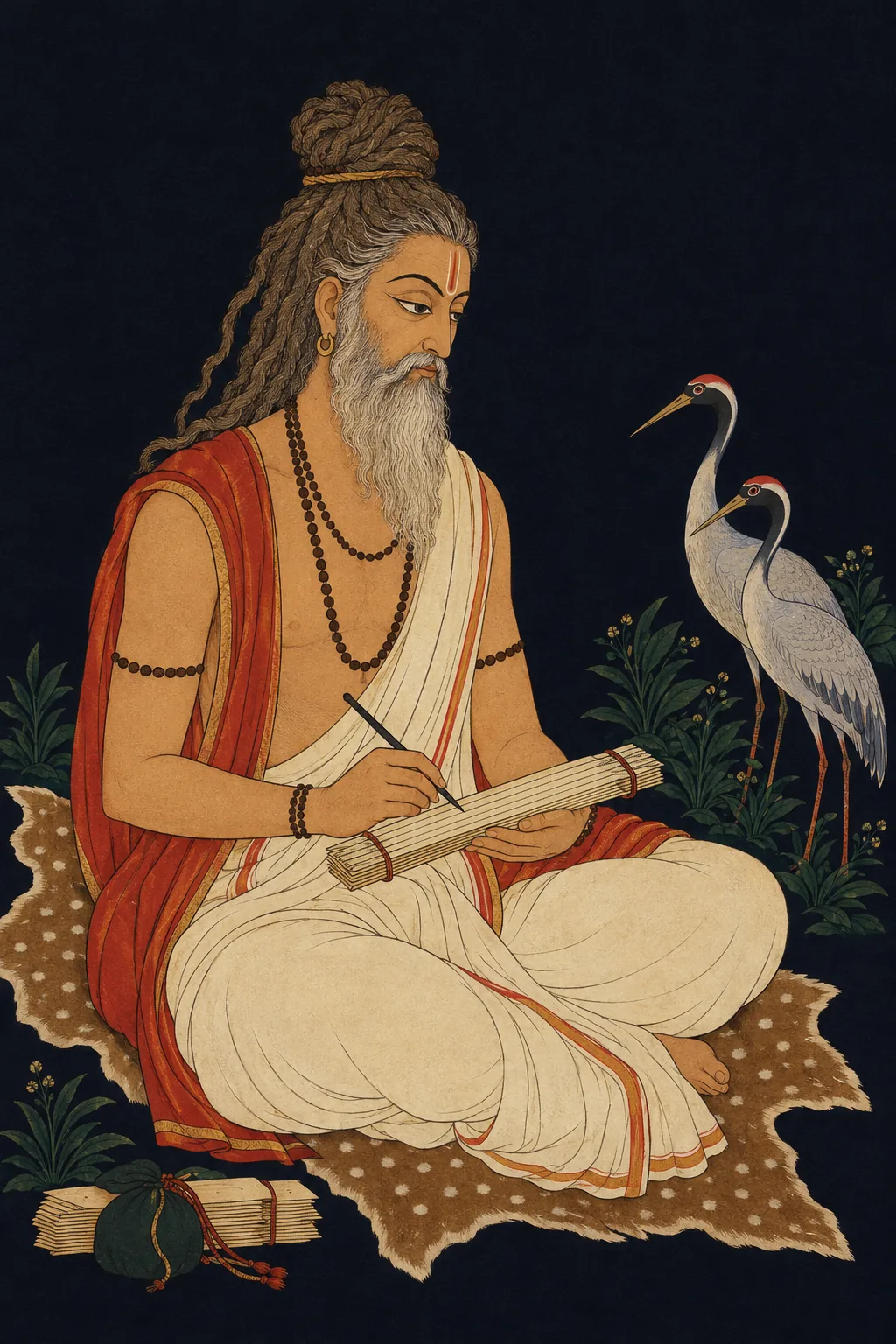
The illustrations were made for this guide in the manner of Pahari miniature painting. They are new pictures, not reproductions, and they follow the poem's own descriptions where it gives them.
Texts and references used: Valmiki Ramayana with Sanskrit text and translation · Valmiki Ramayana project, IIT Kanpur · List of characters in the Ramayana, Wikipedia
Compiled for readers of every age, in the year the poem came back to the cinema.